



Buying steel props and scaffolding looks simple until a shipment arrives with the wrong class, no test certificate, and threads that seize on site. The cheap quote becomes expensive when the support fails audit or the schedule slips waiting for replacements.
A reliable manufacturer is not the one with the lowest price, it is the one who can prove the steel grade, the coating, and the load class, and who stocks the matching parts so your system stays complete. Sourcing is a risk decision, not a purchase.
This guide gives procurement teams a practical checklist for vetting steel support suppliers, from certificates to customization, and the warning signs that separate factories from traders with a catalog.
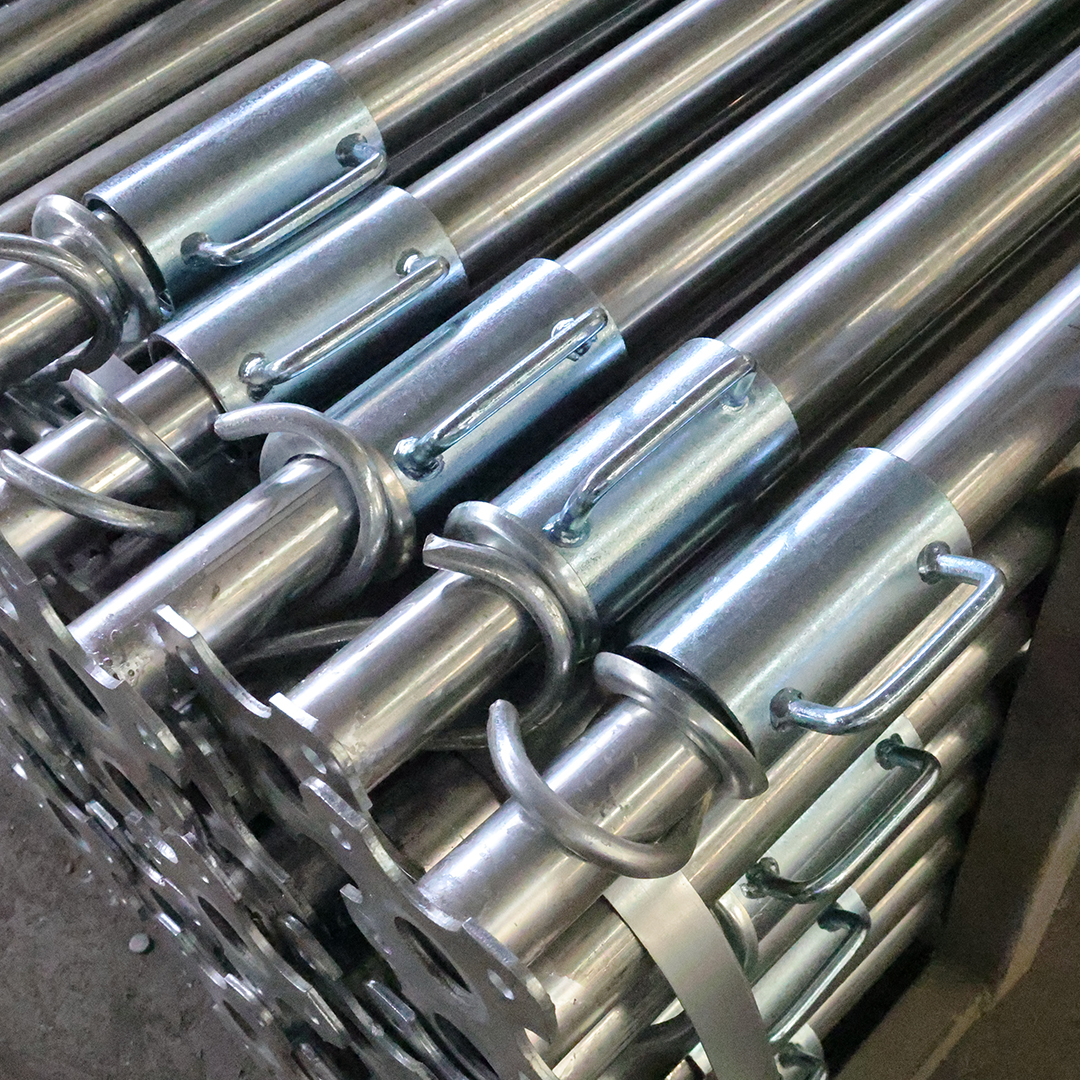
01. Why Supplier Choice Is a Risk Decision
Support components carry people and wet concrete. A substandard prop is a safety event waiting for a load, and the buyer inherits that risk whether or not the price was low. Verificationbefore order is cheaper than rejection after.
For exporters and distributors, supplier reliability also protects your own brand. A single bad batch can undo years of customer trust, so the bar for a supply partner is higher than for a one-off buy.
02. Certifications That Actually Matter
ISO 9001 covers the quality system, but for props you also want the product standard evidence: EN 1065 class and Declaration of Performance for Europe, or equivalent load test reports for other markets. Ask for batch, not generic, certificates.
Coating certificates (for example ISO 1461 for galvanizing) and material mill certificates for the steel grade close the loop from raw bar to finished prop, giving full traceability.
03. Test Evidence Over Claims
A rated class means little without the load test behind it. Request the test report showing the prop held its declared load at the stated height, conducted by an independent or documented in-house lab.
Good suppliers welcome this and keep reports per batch. Suppliers who only offer a brochure number should be treated as unverified until they produce evidence.
04. Customization and Stock Completeness
Real projects need specific lengths, head types, and coatings. A factory that tooling for U-heads, screw tops, and ring lock parts keeps your system complete instead of forcing substitutions that break compatibility.
Stock depth matters too. A supplier who cannot deliver matching ledgers or couplers strands your scaffold mid-build. Ask about lead time and component coverage, not just the prop price.
05. Tangible Value of a Verified Partner
A documented supplier cuts site rejections, audit failures, and emergency replacements, which protects program and margin. The small premium over a bare trader pays back at the first inspection.
For distributors, a partner with consistent quality and certificates builds a defensible reputation, turning a transaction into a long-term channel.
06. Future of Supplier Verification
Digital batch records and QR-traceable props let buyers scan a fitting and see its test history, removing paper chase from audits. Video factory audits are now routine, so distance is less of a blind spot.
Third-party inspection at port before shipment is becoming standard for first orders, catching issues before they cross an ocean.
07. A Buyer's Selection Checklist
Confirm ISO 9001 and the product standard evidence, request batch test and coating certificates, verify customization and component stock, and check references from similar markets. Then price within that qualified shortlist.
Avoid suppliers who dodge certificates, mix standards, or cannot name their steel grade. The right partner proves the product before you pay, not after you complain.
FAQS
What certificate proves a prop's load class?
The EN 1065 class with a Declaration of Performance and a load test report for the batch. For non-European markets, ask for an equivalent documented load test from the supplier.
Is ISO 9001 enough on its own?
No. It confirms a quality system, not the product rating. You still need the product standard evidence, material mill certificates, and coating certificates for the actual prop.
Should I worry if a supplier has no test report?
Yes, for structural support. Treat unverified ratings as claims. A reliable factory keeps per-batch test reports and will share them; lack of evidence is a red flag.
Why does component stock matter?
A scaffold is a system. If the supplier cannot deliver matching ledgers, heads, or couplers, your build stalls or you mix incompatible parts, which is unsafe.
Can a factory customize head types and lengths?
A real manufacturer can tool U-heads, screw tops, and lengths to spec. A trader reselling catalog stock usually cannot, so customization is a good test of factory status.
How do I verify a factory I have not visited?
Request batch certificates, book a video audit, use a third-party pre-shipment inspection, and check references in your market. Distance is manageable with documentation.
Conclusion
Selecting a steel support supplier is a risk decision dressed as a purchase. The reliable partner proves steel grade, coating, and load class with batch evidence, keeps the system complete, and stands behind it after delivery.
Shortlist on certificates and test reports first, then compare price within that qualified group. Our factory supplies certified props, ring lock systems, and fittings with full traceability, visit our website to start a specification review.
References
International Organization for Standardization. ISO 9001:2015 Quality Management Systems. Geneva: ISO; 2015.
European Committee for Standardization. EN 1065:1999 Adjustable Telescopic Steel Props. Brussels: CEN; 1999.
International Organization for Standardization. ISO 1461:2009 Hot Dip Galvanized Coatings. Geneva: ISO; 2009.
Wang Lei
Technical Sales Engineer at Xingyaoda
Wang Lei is a Technical Sales Engineer covering steel support export markets. He helps distributors and project owners specify the right prop type, surface treatment, and standard (EN 1065 / OSHA / BS 5507) for residential, commercial, and infrastructure work, with 10 years in international construction supply.