



A steel prop spends its life outdoors, in wet concrete, and often within salt spray of a coastal or de-icing environment. Left unprotected, the steel rusts, the threads seize, and the rated capacity becomes a guess. Surface treatment is not cosmetic, it is part of the safety case.
Hot-dip galvanizing beats paint for props because the zinc bonds metallurgically to the steel and protects even when scratched. Paint sits on top and fails the moment a handling nick exposes bare metal.
This article explains how galvanizing works, where it pays off most, and how to specify the right coating so a prop lasts the project and the rental life beyond it.
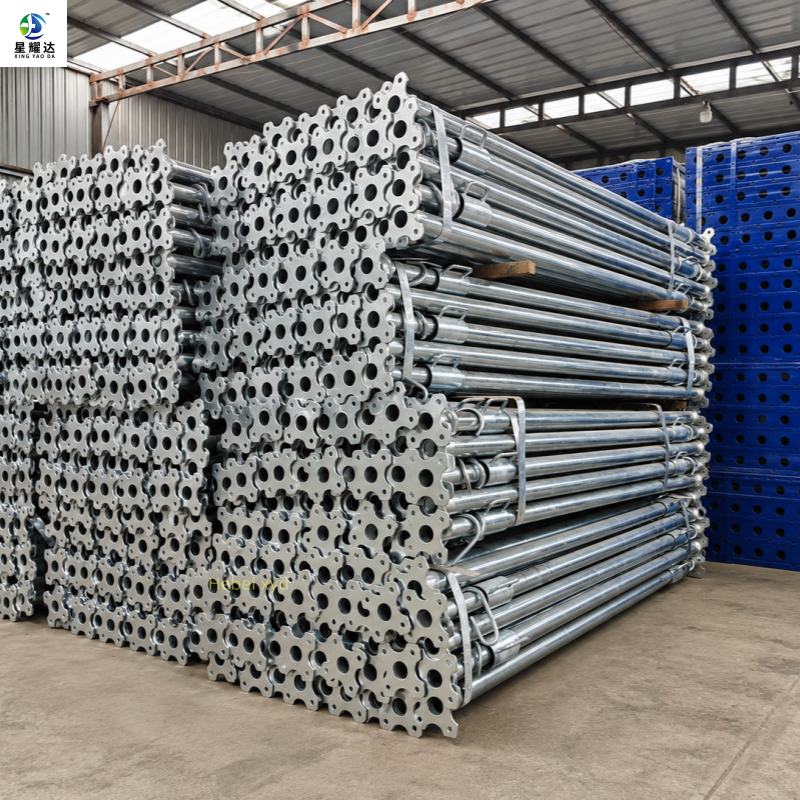
01. Why Corrosion Is a Load Problem
Rust is not just ugly, it eats the tube wall. A few millimeters of loss on a 3 mm prop is a large fraction of its section, cutting capacity and inviting buckling at loads the class once allowed.
Seized threads from rust also block height adjustment, forcing crews to force the nut and risk damaging the prop or the slab alignment. Protection keeps the prop functional, not merely present.
02. How Hot-Dip Galvanizing Forms
The prop is cleaned, fluxed, and dipped in molten zinc near 450 C. The zinc reacts with the steel to form alloy layers, then a pure zinc outer layer. The result is a coating bonded at the atomic scale, not stuck on like paint.
Typical coating mass exceeds 500 g/m2, giving a thickness around 70 to 85 microns. That is far more zinc than a spray or dip paint system deposits, and it covers edges and interiors the paint line misses.
03. Barrier and Sacrificial Protection
Zinc protects two ways. As a barrier it blocks water and oxygen from the steel. As a sacrificial anode it corrodes first, so a scratch at the base plate still protects the surrounding steel instead of spreading rust.
Paint offers only the barrier, and only until it is scratched. In handling-heavy scaffold work, scratches are guaranteed, which is why galvanizing suits the job and paint suits the showroom.
04. Where Galvanizing Pays Off Most
Coastal, marine, and bridge sites with salt exposure are the clear case: hot-dip galvanizing regularly delivers 20 to 30 years of service there. Long-duration projects and rental fleets also benefit because the asset keeps earning between jobs.
Short indoor fits can use lighter powder coating or paint, but the moment a prop sees weather or concrete moisture, galvanizing is the safer baseline.
05. Tangible Lifecycle Value
A galvanized prop needs no repainting cycle, resists thread seizure, and passes inspection on appearance alone. Over a five-year rental life the avoided recoating and replacement often exceeds the small upfront premium over paint.
For owners, fewer failures mean fewer emergency swaps and a safer striking record, which protects both program and liability.
06. Future Coating Trends
Dual systems, galvanize plus powder topcoat, are gaining for client-facing fits where color matters. Zinc-aluminum alloys are also appearing, offering similar protection with thinner, smoother finishes.
Coating thickness mapping by laser is making incoming inspection faster, so buyers can verify the spec without destructive tests.
07. How to Specify the Right Coating
State the standard (for example ISO 1461 for general galvanizing) and a minimum coating mass suited to your environment, higher for coastal. Ask for a test certificate per batch, not a generic claim.
Pair the finish with handling rules: drain props after rain, store off wet ground, and touch up any cut edge with zinc-rich paint. The coating does the heavy lifting, but storage still matters.
FAQS
Is galvanizing better than powder coating for props?
For outdoor and coastal use, yes. Galvanizing bonds to the steel and self-heals scratches, while powder coating is a barrier that fails if chipped. Powder coat suits indoor or short decorative use.
How long does a hot-dip galvanized prop last?
In mild inland conditions, decades. In coastal or de-icing salt environments, commonly 20 to 30 years with proper handling. Life depends on coating thickness and exposure.
Can I paint over galvanized steel?
Yes, with the right primer, usually for color coding. The zinc stays the primary protection; the paint is secondary. Use a zinc-compatible system to avoid adhesion failure.
What coating thickness should I specify?
Follow the relevant standard and raise the minimum for harsh sites. For coastal work, ask for the upper end of the ISO 1461 range and request batch certificates.
Do threads get galvanized too?
They should be, then run with a tap or during assembly so the nut moves freely. Good suppliers check thread function after coating rather than leaving it seized.
Is galvanizing safe around fresh concrete?
Yes. The alkaline concrete environment is actually mild to zinc compared with acidic or chloride exposure, and the coating protects the prop through the wet curing phase.
Conclusion
Hot-dip galvanizing turns a corrosion liability into a documented asset life. By bonding to the steel and protecting through scratches, it keeps props adjustable, inspectable, and safe long after painted finishes have failed.
Specify the coating to your environment and verify it with certificates. Our galvanized prop range covers standard and heavy-duty classes for indoor, outdoor, and coastal work, details on our website.
References
International Organization for Standardization. ISO 1461:2009 Hot Dip Galvanized Coatings on Fabricated Iron and Steel Articles. Geneva: ISO; 2009.
American Galvanizers Association. Specifications for Zinc Coating Thickness. Centennial: AGA; 2019.
ASTM International. A123/A123M-17 Zinc Coatings on Iron and Steel Products. West Conshohocken: ASTM; 2017.