



How to Choose the Right Adjustable Steel Props for Your Construction Project
Choosing the right adjustable steel props can make or break a concrete pour. Get it right, and your formwork holds firm. Get it wrong, and you are looking at costly delays or worse — a safety hazard. This guide walks through what actually matters when you are evaluating props for a real job site.
Understand Load Capacity First
Before anything else, you need to know what kind of load the props will carry. Steel props are rated by the maximum axial load they can support at a given extension height. A prop rated at 1.8 tons when extended to 2 meters might only handle 0.8 tons when extended to its full 4-meter reach. Always check the manufacturer's load chart and match it to your actual slab or beam weight — never guess. Selecting a prop with a higher safety margin than your calculated load is standard practice on any professional job.
Match the Height Range to the Job
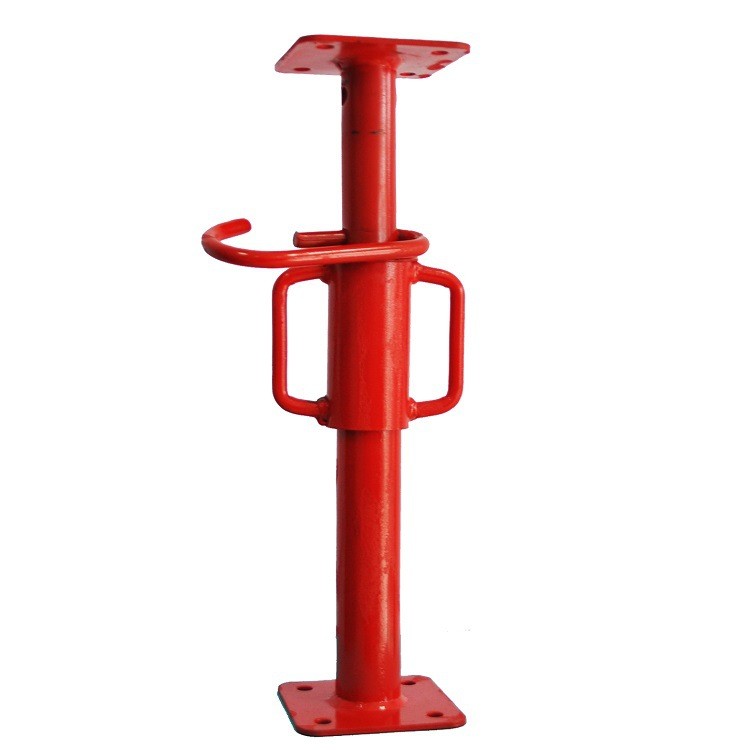
Adjustable steel props typically extend from around 1.8 meters up to 4 or even 6 meters depending on the model. Knowing your slab soffit height in advance lets you pick a prop that sits comfortably within its most efficient range — usually somewhere in the middle of its adjustment travel. A prop extended near its minimum or maximum limit is under more stress and less stable. If your project has variable slab heights, keep a mix of short and long models on hand.
Check the Steel Grade
The most common steel grades used in adjustable props are Q235 and Q345. Q235 offers a yield strength of 235 MPa and works well for light to medium-duty applications. Q345 bumps that up to 345 MPa, giving you a heavier-duty prop that handles greater loads without added wall thickness. If your formwork system is supporting thick concrete slabs or multi-story pours, Q345 is usually the smarter choice. Most manufacturers offer both grades — ask your supplier which is right for your specific conditions.
Surface Treatment Affects Lifespan
Steel props on a construction site face moisture, alkaline concrete, and repeated handling. Without proper surface protection, they corrode fast. Common treatments include red oxide paint, powder coating, and hot-dip galvanizing. Painted props are the most budget-friendly option and work fine for short-term projects. Galvanized props resist rust far better and last significantly longer — worth the extra investment if the props will see repeated use across multiple projects. Always ask what surface treatment is applied before placing an order.
Consider Connection Compatibility
Props do not work alone. They typically pair with tripods for stability on flat surfaces, fork heads or U-plates for sitting under beam formwork, and various couplers or clamps for connecting to other shoring components. Make sure the prop you choose has compatible fittings for your existing system. Italian-style props, Spanish-style props, and Middle Eastern-style props each use different head configurations — confirm fit before you commit to a purchase.
Inspect Portability and Storage Needs
If your crew moves frequently between pours, the weight and collapsed length of each prop matters. Most standard adjustable steel props collapse down to roughly half their extended length, making them manageable for transport in standard trucks or trailers. For jobs with limited site access, look for lighter-duty models that still meet your load requirements without adding unnecessary bulk.
Work With a Reliable Supplier
A trustworthy manufacturer or supplier will provide load charts, material certifications, and sizing documentation without hesitation. They should be able to confirm that their steel props meet relevant standards for your target market — whether that is EN1065, ASTM specifications, or GB standards. Good suppliers also offer customization options for head types, colors, and branding, which is a real advantage for larger contractors who want to standardize their equipment fleet.
Key Takeaways
Spend time on load calculation before you buy. Match height ranges to your actual slab heights. Choose Q345 for heavy pours, Q235 for lighter applications. Factor in surface treatment based on how many times the props will be reused. And always confirm fitting compatibility with your existing formwork system before finalizing any order.
Whether you are running a small residential pour or managing a multi-story commercial structure, getting the right adjustable steel props is not just about price — it is about keeping your crew safe and your schedule on track.
References
Okorder.com — Steel Prop Product Specifications and Load Charts, published product data
Made-in-China.com — Adjustable Steel Prop Manufacturer Catalogs, factory product documentation
CivilBlog.org — Construction Scaffolding Types and Applications Guide, civil engineering reference
Docin.com — Q235 and Q345 Steel Fatigue Properties Study, academic material science reference