



An adjustable steel prop is one of the most widely used temporary support devices in modern construction. Whether you are pouring a concrete slab, supporting beam formwork, or shoring an existing structure during renovation, the adjustable steel prop provides a fast, reusable, and cost-effective way to transfer vertical loads safely down to the ground.
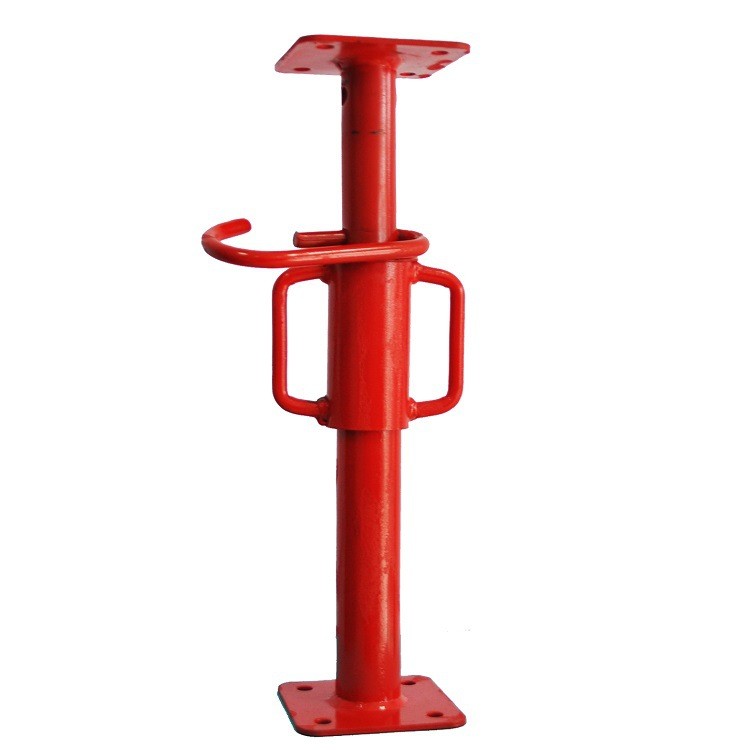
For contractors sourcing from international suppliers, understanding how steel props are built, rated, and finished is the difference between a safe pour and a costly failure. This guide explains the core components of an adjustable steel prop, the role of Q235 steel, common load ratings such as the 800kg class, and how to match the right prop to your concrete formwork support plan.
We also cover surface treatments, hot dip galvanized versus painted, and explain why experienced buyers specify XYD adjustable steel props for projects ranging from residential apartments to large commercial slabs.
What Is an Adjustable Steel Prop?
An adjustable steel prop, sometimes called a telescopic steel prop or shoring prop, is a vertical load-bearing device made of two nested steel tubes. The inner tube slides inside the outer tube, and a pin or threaded collar locks it at the required height. A base plate spreads the load at the floor, while a top plate or U-head supports the formwork beam above.
This simple telescopic design lets one prop cover a wide height range, typically from 2 meters up to 3.5 meters or more, replacing the need for many fixed-length timbers. Because the prop is reusable for hundreds of cycles, it is a staple of any steel prop shoring system.
Why Steel Props Are Used for Concrete Formwork Support
During a concrete pour, fresh slabs and beams have no strength of their own until the concrete cures. A concrete formwork support system holds the shuttering in place and carries the full wet-load weight. Steel props are preferred because they are predictable, strong, and easy to inspect.
Key advantages of using a steel prop for formwork:
Reusable: one prop serves many projects, lowering total cost versus timber.
Adjustable height: fine-tune levels without cutting materials on site.
High load capacity: the 800kg class handles typical slab and beam loads.
Quick to install: no nails or complex framing required.
Galvanized option: hot dip galvanized finish resists corrosion on outdoor sites.
Key Specifications to Check Before Buying
Not all steel props are equal. Before placing an order, verify these specifications with your supplier so the prop matches your structural design.
| Specification | Why it matters | Typical XYD value |
|---|---|---|
| Material | Strength and weldability | Q235 carbon steel |
| Height range | Must cover slab soffit to floor | 2.0m – 3.5m (telescopic) |
| Load capacity | Safe support of wet concrete | Up to 800kg per prop |
| Surface finish | Indoor vs outdoor durability | Hot dip galvanized or painted |
| Base / top plate | Load spread and beam support | Welded steel plate, U-head optional |
| Certification | Quality traceability | ISO-certified, 3-year warranty |
Galvanized vs Painted: Choosing the Right Finish
A hot dip galvanized steel prop is coated in molten zinc, giving a thick, bonded layer that survives years of outdoor exposure and handling. Painted or spray-paint props are more economical and suit indoor or short-term use where corrosion risk is low.
For projects that store props outside between uses, or that span multiple seasons, galvanized telescopic steel props are the safer long-term choice. Painted props remain popular for budget-conscious, indoor slab work.
How Adjustable Steel Props Work with Shoring Systems
A single prop rarely stands alone. On a real slab, props are spaced on a grid, capped with timber or steel beams, and often braced with scaffolding to prevent sideways movement. The prop, beam, and formwork together form a complete shoring system.
When paired with steel formwork tie rods on wall work, the same site can standardize on a single supplier for both vertical and horizontal support, simplifying procurement and quality control.
Common Applications on the Job Site
Adjustable steel props appear wherever temporary vertical support is needed:
Slab formwork support for residential and commercial floors.
Beam and ring-beam support during concrete pours.
Renovation and refurbishment shoring of weakened structures.
Bridge deck and falsework applications.
Temporary overhead protection frames when combined with scaffolding.
Frequently Asked Questions
Conclusion
An adjustable steel prop is a foundational tool for safe, repeatable concrete formwork support. By checking material grade, height range, load capacity, and finish, buyers can specify props that protect both the structure and the budget.
For project-specific advice, load calculations, and a quotation on XYD adjustable steel props and shoring accessories, contact the Hebei Xingyaoda (XYD) team at www.xydsteelprops.com.