



The plank is the surface workers stand on, yet it gets less attention than the standards and braces holding it up. A weak or deflected board is a fall and drop hazard regardless of how sound the scaffold frame is, so decking rating belongs in the same safety conversation as the structure.
Steel scaffold planks, used as decks on ring lock and tube systems, carry higher uniform loads than timber boards and resist fire, rot, and splitting. They also span wider bays, cutting the number of ledgers needed.
This article covers how steel decks are rated, how to match them to platform load, and the practical checks that keep a working platform safe through the job.
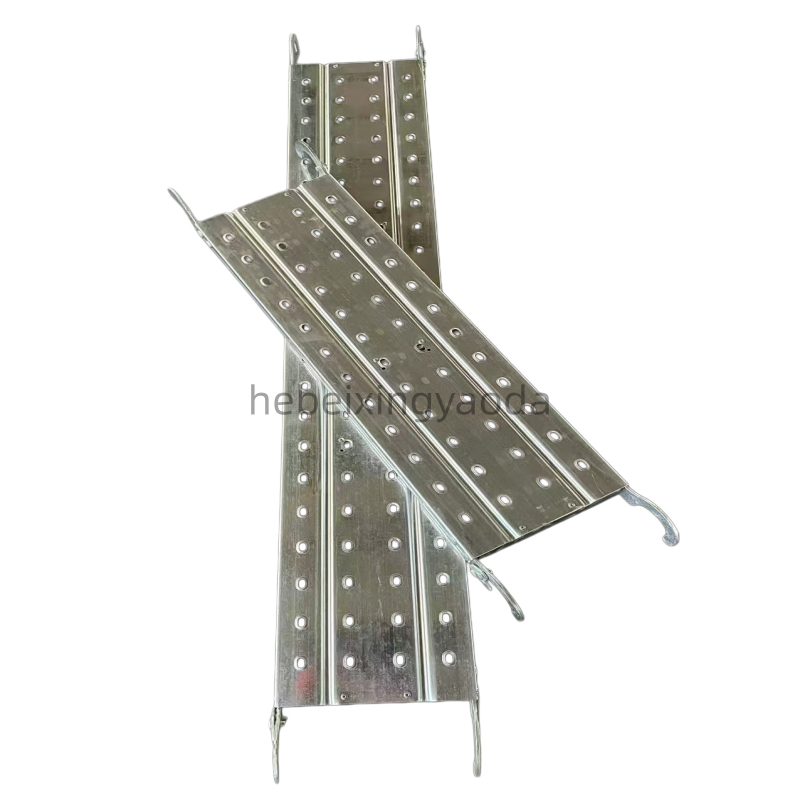
01. Why Deck Rating Is a Safety Item
A platform must hold its own weight plus crews, tools, and stacked materials without excessive deflection or sudden failure. Timber boards can hide rot and splits; a broken board drops people and load with no warning.
Steel decks are engineered with a stated safe uniform load and a deflection limit, so the platform performance is known, not assumed. That shifts scaffold safety from hope to specification.
02. How Steel Plank Load Is Defined
Manufacturers rate a plank by safe uniform load per square meter and by point load, with a maximum mid-span deflection (often around 1/200 of span). The rated span depends on the deck profile and thickness.
Because steel is consistent, the same board performs the same every time, unlike timber where grain and knots vary board to board. Inspection becomes a check of coating and ends, not a gamble on hidden flaws.
03. Matching Deck to Platform Use
Light access platforms for one or two workers need lower ratings than material loading bays where blocks and pallets sit. Specify the deck class to the heaviest realistic use, not the typical one, to keep margin.
On ring lock, choose decks that clip into the ledger clearly so they cannot lift in wind or kick during loading. Loose boards are a leading cause of platform incidents.
04. Advantages Over Timber Boards
Steel decks resist fire, do not rot, and will not split under a dropped tool. They span wider, reducing ledger count, and they stack flat for storage without warping, which keeps the fleet ready.
The trade-off is weight per board, handled by using smaller sections or two-person lifts. On most commercial sites the safety and reuse gains outweigh the handling cost.
05. Tangible Site Value
Fewer board failures mean fewer stoppages and a cleaner safety record for audits. Reuse across projects removes the recurring purchase of timber boards that are scrapped after a season.
For rental firms, steel decks are a durable asset with a long, documentable life, supporting higher utilization than consumable timber.
06. Future Deck Developments
Galvanized-aluminum composite decks are cutting weight while holding load, easing manual handling. Perforated anti-slip top faces are becoming standard for wet climates and concrete works.
Some decks now carry embedded RFID for inspection tracking, linking each board to its test record the way standards already do for props.
07. Specification and Inspection Tips
State the required platform load and span, then pick a deck profile rated above it with margin. Confirm the connection type matches your ledger so the board seats positively.
Inspect ends and coating before each use, keep loads within the rated class, and never bridge a gap wider than the deck is certified for. Margin, not maximum, keeps platforms safe.
FAQS
Are steel planks stronger than timber boards?
For rated uniform load and span, yes, and they are consistent batch to batch. Timber varies with grain and hidden defects; steel decks perform to a documented rating every time.
Can steel plank be used on tube-and-coupler scaffold?
Yes, with the right support method, but ensure the board sits on a proper bearer and is secured against lift. Many sites use steel decks across both ring lock and tube systems.
What load class do I need for a material bay?
Higher than a walking platform, often 3 to 6 kN/m2 or more depending on stored weight. Specify to the heaviest realistic stack and keep margin for dynamic loading.
Do steel decks get slippery when wet?
Plain steel can, which is why anti-slip perforated or textured top faces are recommended for outdoor and concrete work. Choose the profile for your conditions.
How are steel planks inspected?
Check coating, end condition, and any deformation; confirm the rated load and span label is present. Unlike timber, there are no hidden knots, so inspection is quick and reliable.
Is the extra weight a problem?
It is manageable with correct lift planning and smaller sections. The safety, fire resistance, and reuse benefits generally outweigh the handling cost on commercial sites.
Conclusion
Steel scaffold planks turn the working surface from a variable timber risk into a rated, repeatable safety component. Matched to platform load and properly seated, they remove a whole class of fall and drop hazards from the scaffold.
Specify deck class and span from your heaviest use and keep inspection simple. Our steel deck range clips into ring lock ledgers for secure platforms, see the details on our website.
References
Scaffold Industry Association. ANSI/SAIA A10.8-2019 Scaffolding Safety Requirements. Fairfax: SAIA; 2019.
National Access and Scaffolding Confederation. TG20:21 Tubular Scaffolding Good Practice Guide. London: NASC; 2021.
Occupational Safety and Health Administration. 29 CFR 1926 Subpart L - Scaffolds. Washington: OSHA; 2023.
Chen Hao
Scaffolding Safety Engineer at Xingyaoda
Chen Hao is a Scaffolding Safety Engineer with a background in structural inspection and site safety auditing. He advises rental companies and builders on coupler selection, plank load rating, and corrosion protection, drawing on 8 years of field experience across Middle Eastern and African job sites.